


Long-term planning
Companies have a duty to maintain the security of their supplies. To do this they produce Water Resource Management Plans. These plans set out forecasts of supply and demand over a 25-year horizon, and how companies intend to provide sufficient water to meet their customers’ needs, while protecting the environment.
Section 62 of the Water Act 2003 requires each company to review its plan each year and provide the conclusions of its review to the Secretary of State for the Environment, Food and Rural Affairs. Companies prepare revised plans if their review points to a material change in circumstances or if the Secretary of State asks them to. Each company prepares a revised plan every five years.
We have a duty to make sure that water companies can finance and fulfil their functions –including maintaining the security of their supplies – and to promote economy and efficiency. As part of the process of setting price limits, we assess companies' water resource management plans to ensure that the measures proposed to maintain the balance between supply and demand for water provide value for money, taking account of environmental and social costs.
The Environment Agency has more information about water resource planning.
Alternative approaches
In England and Wales, the most common approach to water supply is for each company to take out the water it needs from groundwater and rivers and to store it in reservoirs. There are other approaches to planning, including transferring or trading water between companies on a national basis, and using desalination to extract freshwater from the sea. These approaches are explained below.
National water grid
The companies already move water around to meet demand, both within their own operational areas and between companies. They seek local solutions wherever possible.
Some people suggest that this could be taken further and that a network of pipes, similar to the energy national grid,could move water from the wetter north and west to the drier south-east. However, current analysis suggests that it would not make economic or environmental sense to seek to establish a larger, national grid. This is because it is expensive to transport water and mixing different water sources can present chemical and in some cases health and other issues.
Desalination
Desalination is the removal of salt and other minerals from salt water to create water that is suitable for human consumption or irrigation.
Water companies consider a wide range of measures to balance supply and demand, including desalination. Desalination can provide a very reliable source of water and new technology means that the process is becoming more efficient. However, it still uses large amounts of energy that can make a significant contribution to greenhouse gases. In addition the water produced is relatively expensive.
In most instances desalination will not be the most cost-effective or environmentally friendly option. In areas that are particularly water stressed it may be a viable option.
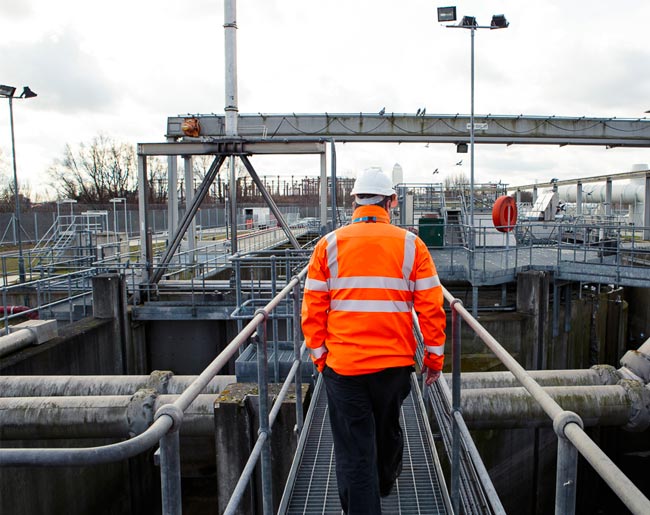
Thames Water has recently developed the UK’s first large-scale desalination plant at Beckton, east London. It will provide back-up supply in the event of a drought and offers additional capacity of up to 140 million litres a day (enough to supply more than 870,000 people).